Establishing a practitioner-led, cross-border corridor to drive high-ROI resource circularity, industrial decarbonization, and bankable green finance.
"An industry-to-industry connect with the intention of creating economic and social value toward a decarbonized future."
The Global Thread Alliance (GTA) is a regional industrial alliance advancing supply-chain decarbonization, technical collaboration, and joint climate capital mobilization across South Asian and Southeast Asian textile manufacturing hubs.
Decarbonizing the regional garment supply chain by 2030 will require an estimated $13.1 billion in investment across energy efficiency, water circularity, and renewable energy integration. With sustainability regulations increasingly extending low-carbon requirements from fiber to finished garment the regional industries can further benefit from learning and access to support. GTA addresses this gap by aggregating fragmented MSME to build knowledge insights, connect with key stakeholders and strengthen the prospect of decarbonization.
With participants from India, Bangladesh, Nepal, Sri Lanka, amongst other geographies, the regional alliance hopes to turn decarbonization requirements into a competitive advantage. GTA transforms the traditional relationships between the regional markets into a symbiotic regional partnership—combining the strength of each nation's industries in to a learning opportunity for the other. Together, the Alliance is building a unified, low-carbon Asian manufacturing corridor positioned to strengthen global market competitiveness and unlock resources and knowledge for climate finance.
Connect textile clusters across South and Southeast Asia to share proven low-carbon solutions—from renewable energy and water-efficient processes to green industrial infrastructure and energy-efficient technologies
Promote practical interventions such as water recycling, automated chemical dosing, natural ventilation and daylighting, waste-heat recovery, and production-line optimization to reduce resource use and operating costs.
Facilitate vendor-neutral assessments by regional technical institutions. Participating factories receive a confidential diagnostic report outlining priority measures, estimated utility savings, investment requirements, and expected payback
Combine retrofit opportunities from multiple factories into investment-ready portfolios. This enables development-finance institutions, domestic lenders, and philanthropic partners to provide concessional loans, credit guarantees, and technical-assistance grants at scale.
The Global Thread Alliance brings together industry associations, manufacturers, financial institutions, development partners, and technical stakeholders committed to accelerating the decarbonization of the textile and garment supply chain.








20+ CEOs | 20+ Industry Leaders | ...and more to be announced.
The foundation of this Alliance rests on combining three distinct, highly specialized industrial advantages to create a unified and resilient sustainable textile corridor.
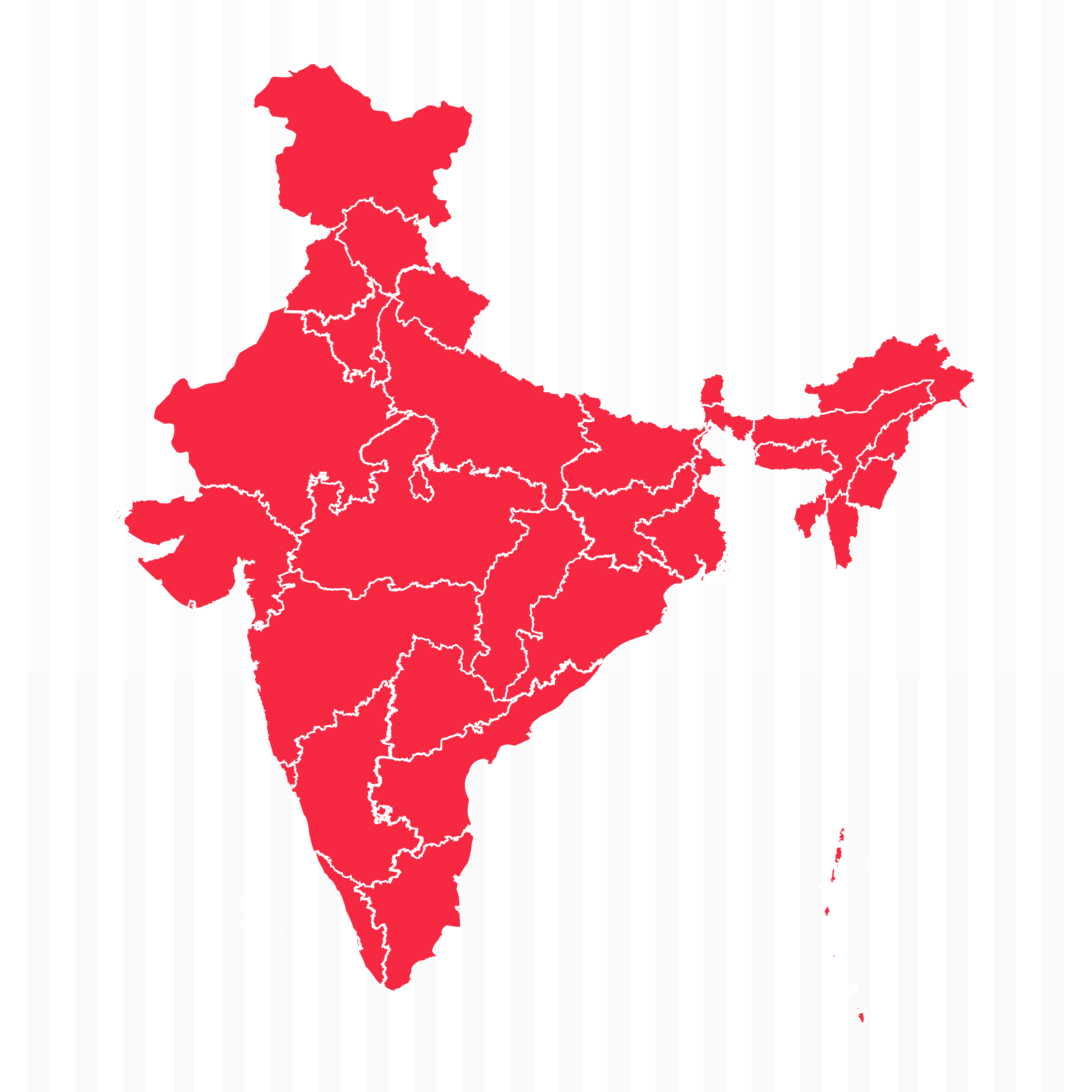
Open-access/Green Energy open access/ Rooftop solar and group-captive mechanisms enable textile manufacturers to procure solar and wind power at scale, supporting industrial decarbonisation.
Indian textile clusters have developed expertise in Zero Liquid Discharge, membrane filtration, water reuse, and salt recovery for resource-efficient wet processing.
Bangladesh leads globally in LEED-certified garment factories, demonstrating strong capabilities in efficient building design, daylight utilization, ventilation, and resource management.
Its export-oriented garment sector has extensive experience in high-volume production, efficient equipment integration, production-line optimization, and factory-level energy management.
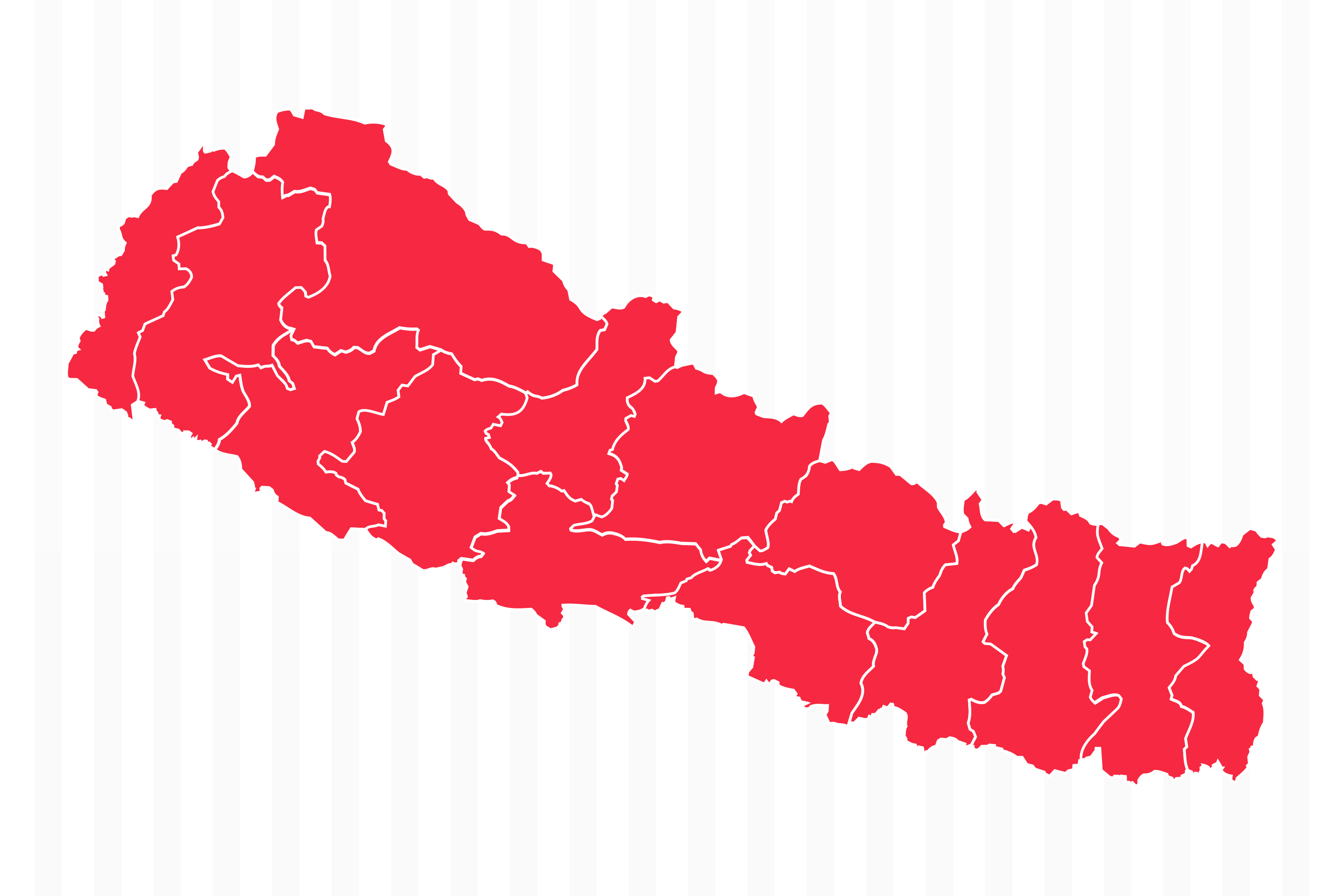
Nepal’s hydropower-based electricity system offers significant potential for developing low-carbon textile and garment manufacturing.
The country contributes expertise in pashmina, wool, hemp, nettle and other natural fibres, combining traditional craftsmanship with opportunities for sustainable, high-value production.
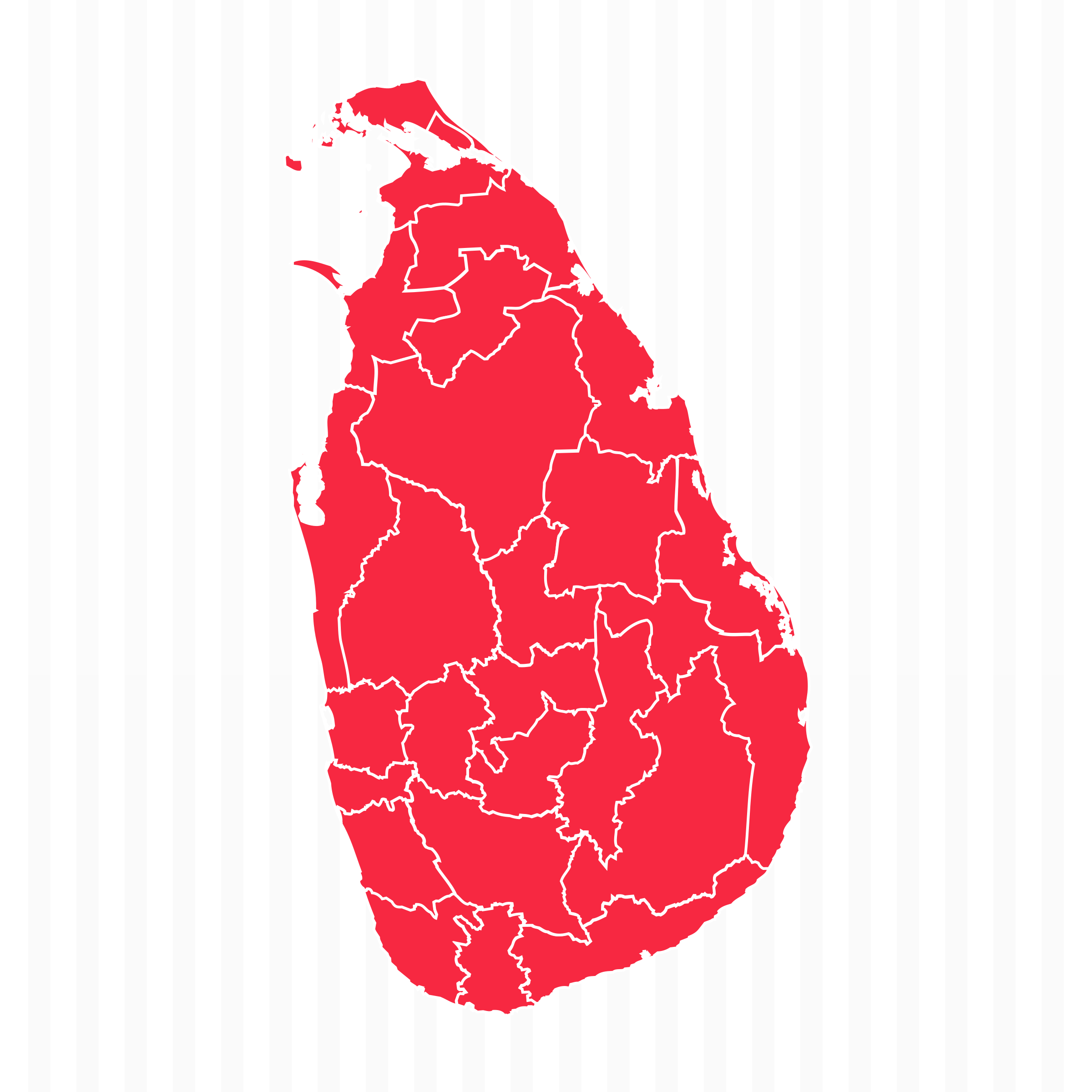
Sri Lanka has developed a strong reputation for responsible, export-oriented apparel production, supported by resource-efficient factories, environmental management and workforce standards.
Its manufacturers bring expertise in high-value apparel, product innovation, material efficiency, waste reduction and emerging circular-production practices.
Co-managed by leading industry bodies—CITI, BGMEA, and BTMA—the lean operational Secretariat serves as the permanent vehicle for technical synchronization and capital mobilization.
Direct transfer of Bangladeshi LEED facility blueprints to Indian factory floors to optimize daylight harvesting and passive cooling.
Direct deployment of Indian ZLD treatment models to reduce water recycling Opex in wet-processing hubs.
Collecting cross-border energy and water audit data from member facilities into unified, high-volume investment bundles.
Securing first-loss guarantees and interest-rate subventions from Multilateral Development Banks (IFC, ADB, EIB, GCF).
Energy efficiency, renewable energy, electrification / low-carbon process heat, water efficiency and waste heat recovery.

Energy efficiency, renewable energy, electrification / low-carbon process heat, water efficiency and waste heat recovery.
Energy efficiency, renewable energy, electrification / low-carbon process heat, water efficiency and waste heat recovery.
Energy efficiency, renewable energy, electrification / low-carbon process heat, water efficiency and waste heat recovery.